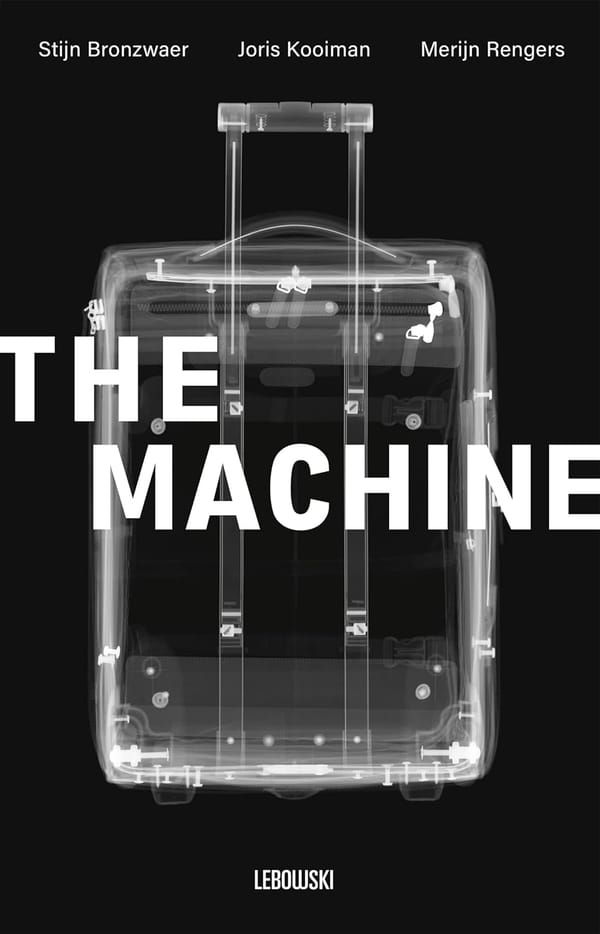
By Stijn Bronzwaer, Merijn Rengers, Joris Kooiman (2022)
Pages: 370, Final verdict: Great-read
Ask someone on a Paris street where Instagram is from, and you will likely get a confident answer. Do the same for Spotify, and Sweden comes up quickly. Ask about Booking.com, and you'll be met with silence. More than 100 million people use it every month. But few can place it on a map or name its CEO. And that anonymity is the perfect entry point to The Machine, a book about one of the most successful technology companies of the last quarter century, built largely out of public sight.
Booking.com has been around since the late 1990s, survived the dotcom crash, and quietly turned into one of the most profitable internet businesses ever created. Today, it processes > 1 billion hotel nights a year (1.1B in 2024) and billions more in net profit ($5.8B in 2024), yet it rarely features in popular startup mythology. This book sets out to explain how that happened.
The authors are journalists and tech reporters, all based in the Netherlands. The Machine is written as a largely chronological history of Booking.com, starting with Geert Jan Bruinsma, a young Dutch graduate with a simple idea in 1996. Hotels should be bookable online, and those bookings should be binding. At the time, that alone was radical.
Early Booking was held together with what one engineer calls “digital spit and glue”. Faxes, phone lines, and primitive web pages were stitched together by custom scripts. Bruinsma personally retyped reservations by hand when demand exceeded the system. The company charged hotels a five percent commission, very low by the standards of the travel industry in the late 1990s. Growth was slow, cautious, and profitable, which already set it apart from the venture-backed excesses of the era.
"We used separate pieces of software to stitch everything together. One to convert booking info from the site into a fax to a hotel, another to translate a telephone call about room availability into updated info for the website." - a description of one of the first versions of Booking.com
That difference between European and American startup culture runs through the book. Booking didn't raise large VC rounds. Instead, ownership shifted through employees, small investors, and large internal power struggles. The company stayed low profile, deeply Dutch in its pragmatism and frugality. Ironically, its defining moment came when it was acquired by an American company, Priceline, which provided the capital and patience to scale what was already a remarkably efficient machine.
What makes Booking exceptional, and what The Machine captures best, is how systematically it found and exploited leverage. The most important example is Google Ads. Booking absolutely dominated AdWords. By creating millions of highly targeted landing pages and bidding aggressively on long tail search terms, the company turned advertising into a repeatable money multiplier. One euro in, two euros out. At scale, that became an almost unbeatable advantage. At one point, Booking was the largest advertiser on Google worldwide.
Another core asset was experimentation. One of the book’s strongest passages describes how Booking embraced A/B testing. Early on, the team ran more than twenty experiments with no positive results. Then one worked. A small message suggesting scarcity, “Only a few rooms left”, significantly increased conversion. From there, experimentation became institutional. Only one in ten tests improved performance, but that was enough. Over time, this discipline turned product development into a data driven engine rather than a battle of opinions.
The book is also candid about people and power. Figures like Kees Koolen loom large, a key executive and CEO for 3 years who almost comically made more money as an advisor to Uber than during his entire tenure at Booking. There are boardroom battles, legal fights over domains, clashes between Amsterdam and American leadership, and plenty of internal drama. Sometimes this comes at the expense of deeper technical or product detail, which is one of the book’s weaknesses.
The narrative is vivid. Booking’s story reads with the intensity of books about companies like Instagram or Uber, which is a compliment. This is a company that grew into a global profit engine while keeping a remarkably plain outward appearance. As one line near the end suggests, Bruinsma’s original dream of a computer in the corner doing all the work more or less came true.
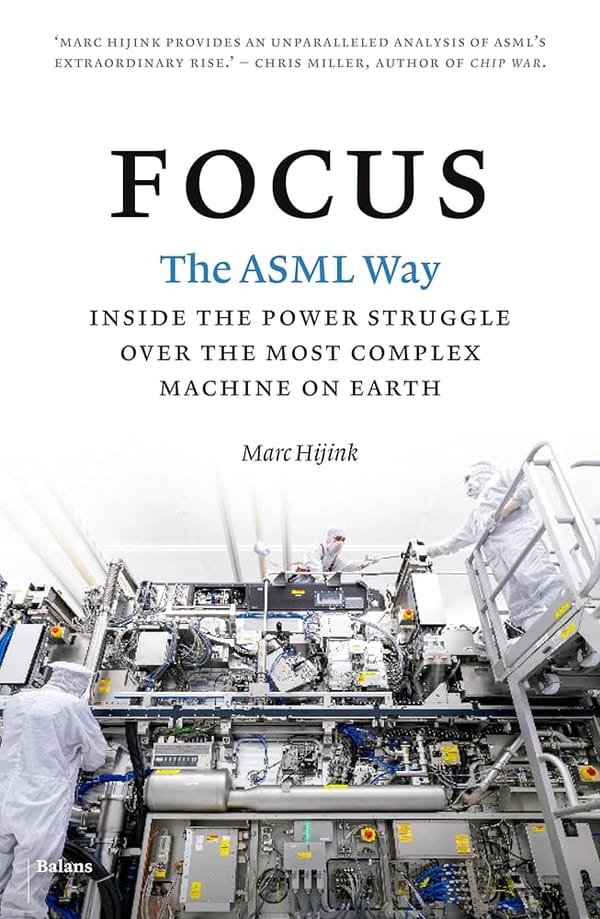
It is also rare. There are very few books about European technology companies of this scale and impact (a notable exception is Focus about ASML, another extraordinary Dutch company). For that reason alone, The Machine is worth reading. It documents how a non-glamorous, execution focused company built one of the most impressive businesses on the internet, without hype, without slogans, and largely without anyone noticing.
The Machine is a case study in quiet dominance. Booking.com did not try to change the world. It tried to book hotel rooms better than anyone else, measured everything, and kept compounding small advantages for more than two decades. The result speaks for itself.